
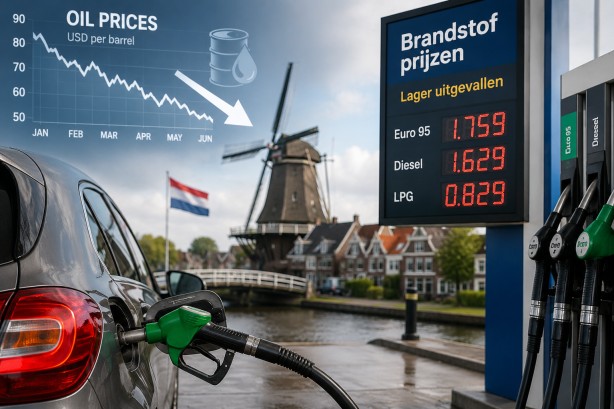
Oil prices have experienced a significant drop following a pause in military tensions between the United States and Iran, leading to optimism about potentially lower fuel costs in the Netherlands shortly. Brent crude, which had been trading at over €88 per barrel last week, has now decreased to just over €81. This decline has been further aided by the strengthening of the euro, as oil transactions are conducted in US dollars, thus lowering the import costs for European buyers.
Despite the downward trend in crude oil prices, the advisory gasoline price in the Netherlands remains at €2.634 per liter. This figure is only slightly below the record high of €2.646, reached earlier in the year. The rise in fuel prices has been notable since the escalation of the conflict involving Iran in late February, impacting consumers at the pump.
Economists and market analysts predict that the decrease in oil prices will eventually be mirrored in the prices seen at fuel stations. However, it is typical for there to be a delay between fluctuations in global oil markets and adjustments in retail fuel prices. This lag means that consumers may have to wait several days before seeing any change in the cost of gasoline.
The recent developments in the geopolitical landscape have played a critical role in shaping oil market dynamics, influencing both wholesale and retail pricing. The easing of military tensions has been a crucial factor in the recent price decline, providing a temporary respite amidst what has been a volatile period for oil markets.