
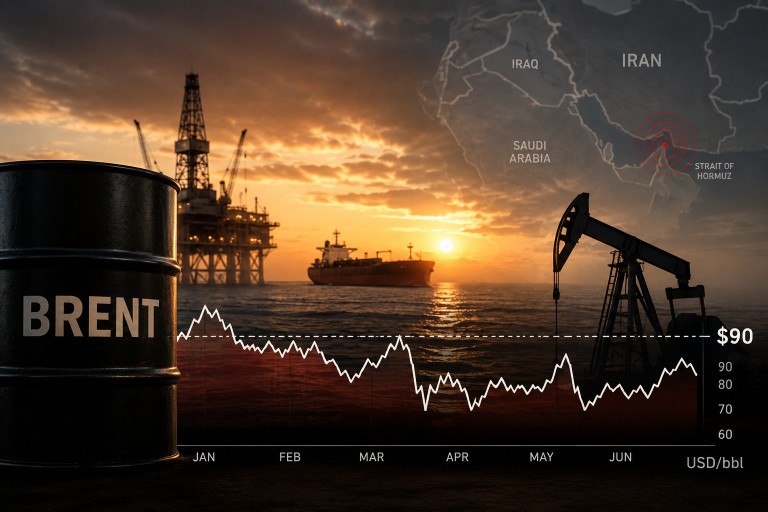
The recent military tensions between the United States and Iran have caused a surge in oil prices, but Brent crude appears unlikely to surpass the $90 per barrel mark without further significant disruptions in the Strait of Hormuz or a noticeable tightening of global oil supplies. Although Brent crude saw its largest weekly gain since April, reaching around $85 on Friday with an 11% weekly increase, it remains below its peak of $87.55 per barrel recorded earlier in the week. Meanwhile, the US benchmark, West Texas Intermediate, approached $80 as market volatility continued.
The Strait of Hormuz, a crucial chokepoint for global oil flows, has experienced reduced tanker traffic due to the ongoing conflict, accounting for about 20% of worldwide oil transit. This disruption has prompted exporters to explore alternative routes, though the global market has remained relatively stable. Analysts suggest that diplomatic negotiations might still prevent escalating tensions, thus restraining further increases in oil prices. Despite the ongoing military exchanges, Brent crude has been trading within a tight range, indicating investor expectations that tensions may de-escalate.
Energy markets are keeping a close watch on whether a prolonged disruption in Hormuz will occur and if global oil inventories begin to dwindle significantly. These factors are critical in determining if a supply shortage might develop. The impact of these geopolitical tensions is already affecting more than just crude oil; refining margins in the United States have risen due to tightening diesel and gasoline supplies, while European fuel markets are experiencing similar strains. The situation is further compounded by diminished Russian fuel exports, which add pressure to the global energy supply chain.
Market participants are particularly focused on the potential for a significant decline in oil inventories and the outcome of diplomatic efforts in the Gulf region. Should these scenarios unfold, they could push Brent crude prices above the $90 threshold. For now, however, analysts anticipate that Brent will remain below this level, despite the ongoing geopolitical risks in the Middle East.