
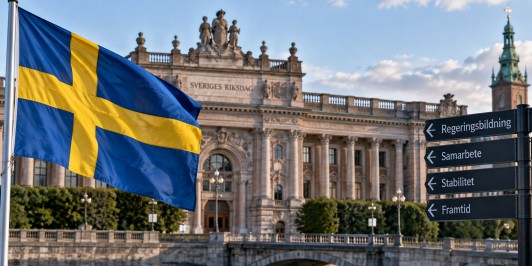
Sweden’s political landscape is in a state of flux as coalition talks commence following a tightly contested parliamentary election. With the vote count nearing completion, the centre-left bloc, spearheaded by the Social Democrats, is marginally ahead, holding 176 seats compared to the right-leaning bloc’s 173. The final tally, including overseas votes, is anticipated later this week, leaving the nation’s political future hanging in the balance.
Magdalena Andersson, leader of the Social Democrats, is actively engaging in discussions to form a coalition government, aiming to return to power. Concurrently, outgoing Prime Minister Ulf Kristersson and his centre-right associates are exploring pathways to maintain their grip on governance. The close results have cast uncertainty over the composition of the next government, with the Centre Party expected to play a pivotal role in the negotiations. However, the party’s reluctance to align with the Left Party poses a potential stumbling block.
The Centre Party has emphasized its desire for a stable government with a clear centre-right orientation, explicitly ruling out cooperation with what it deems fringe political elements. Meanwhile, factions on the left have voiced their support for a governmental shift, cautioning that a prolonged deadlock could trigger another election. The Sweden Democrats, previously a support pillar for the outgoing right-wing government, experienced a dip in backing and are unlikely to feature in the next administration, despite their policies on immigration and crime shaping mainstream discourse.
Kristersson remains flexible, awaiting the final election outcome, as the Moderates and their allies strive to secure a parliamentary majority. The Liberals and Christian Democrats have already dismissed the possibility of collaborating with the Social Democrats. As Sweden’s new parliament prepares to convene on September 28, the earliest potential vote for a prime minister could occur the following day. Should these efforts fall short repeatedly, the country may face the prospect of another election.
The coalition-building process is expected to be protracted, potentially spanning several weeks or even months. Historical precedents, such as the 37-day negotiation following the 2022 election and the protracted 134-day process in 2018, highlight the complexities involved. With no bloc commanding a decisive majority, the Centre and Left parties hold significant sway in determining Sweden’s next leadership configuration.