
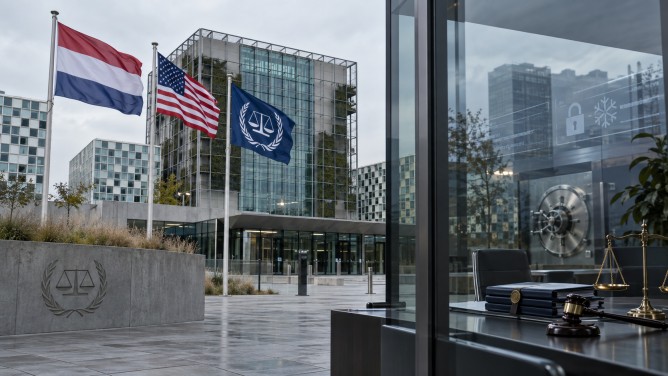
The Netherlands is bracing itself for the possibility of new U.S. sanctions against the International Criminal Court (ICC) amidst escalating tensions between Washington and the tribunal. Officials in the Netherlands, where the ICC is headquartered, are considering contingency plans to ensure the court’s continued operations, which include paying staff, safeguarding witnesses, and maintaining detention facilities should the sanctions impact the ICC’s access to financial services.
The Trump administration has previously imposed sanctions on several ICC officials, expressing disapproval of the court’s investigations into alleged misconduct by U.S. and Israeli personnel. The U.S. accuses the ICC of overstepping its jurisdiction, and there are concerns that the sanctions could be expanded to target the ICC as an institution. Such measures might restrict the court’s ability to engage in transactions involving U.S. companies and services, potentially affecting its banking, insurance, and technology operations.
In anticipation of broader sanctions, the ICC has begun shifting some of its services away from U.S.-based providers and is reevaluating its financial and technological setups. As the host country, the Netherlands has been in discussions about strategies to mitigate the potential adverse effects of these sanctions on the ICC’s functions.
Established in The Hague in 2002, the ICC is tasked with prosecuting individuals accused of genocide, war crimes, crimes against humanity, and aggression, particularly when national judicial systems are unable or unwilling to take action. The court’s ability to carry out this mandate could be significantly impeded if it loses access to essential financial and operational resources due to U.S. sanctions.