
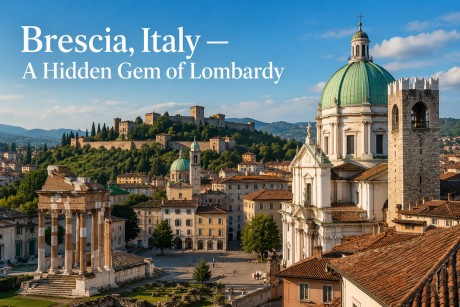
Nestled in the Lombardy region of northern Italy, Brescia is a hidden gem that offers a captivating blend of history, culture, and culinary delights, all without the overwhelming crowds typical of Italy’s more famous cities. Often bypassed by tourists heading to Milan, Verona, or the Dolomites, Brescia presents a unique opportunity to explore historic neighborhoods, vibrant cafés, and significant Roman ruins.
The city’s heart beats in the atmospheric Carmine district, where colorful streets are lined with lively cafés and restaurants, showcasing the vibrancy of local life. Piazza della Loggia stands as a testament to Brescia’s history with its striking clock tower and elegant architecture. This piazza is also a somber reminder of the 1974 bombing, a tragic event that claimed eight lives and marks a darker chapter in Italy’s past.
Brescia’s rich cultural tapestry is further highlighted by its impressive art and architecture. The Teatro Grande is one of Italy’s esteemed historic theatres, while the Church of San Cristo captivates visitors with its ornate interiors and murals. The city’s Roman roots are evident in the Brixia archaeological area, home to the remnants of an ancient temple complex. Additionally, the Santa Giulia Museum showcases a vast array of historical artifacts, offering insight into the region’s storied past.
Gastronomy is another compelling reason to visit Brescia. The local cuisine features delightful dishes such as casoncelli, a stuffed pasta served with butter and sage, and malfatti, a unique form of gnocchi. Wine enthusiasts will find much to appreciate in the nearby Franciacorta region, renowned for its sparkling wines produced in vineyards south of Lake Iseo.
A short journey from the city leads to Lake Iseo and the charming island of Monte Isola, where visitors can enjoy mountain views, traditional fishing communities, and local crafts. The serene lakeside villages offer a peaceful retreat, allowing travelers to experience the tranquility away from Italy’s bustling tourist spots. Brescia’s combination of Roman history, rich culinary experiences, artistic heritage, and proximity to natural landscapes makes it an appealing destination for those seeking a quieter yet equally enriching Italian adventure.